What happens when a client is committed to a design before the team has worked out what it will cost?
AI tools such as xFigura help teams develop ideas faster, moving from an initial sketch to a detailed rendering. That speed gives people more ways to explore a concept and communicate what they want. It also raises a practical question: how does the team turn a convincing image into a viable project?
An image can begin the brief
Clients can now arrive at an architecture practice with their own AI-generated images and ask for those designs to be built. The rendering becomes a starting point for the conversation, before the team has developed the scope, tested the layout, or established a budget.
There is value in that. An image can help someone explain an idea that would otherwise be difficult to describe. The team still needs to establish which parts of the image matter to the client, what the space must do, and what is feasible within the project's constraints.
Work through what the image leaves out
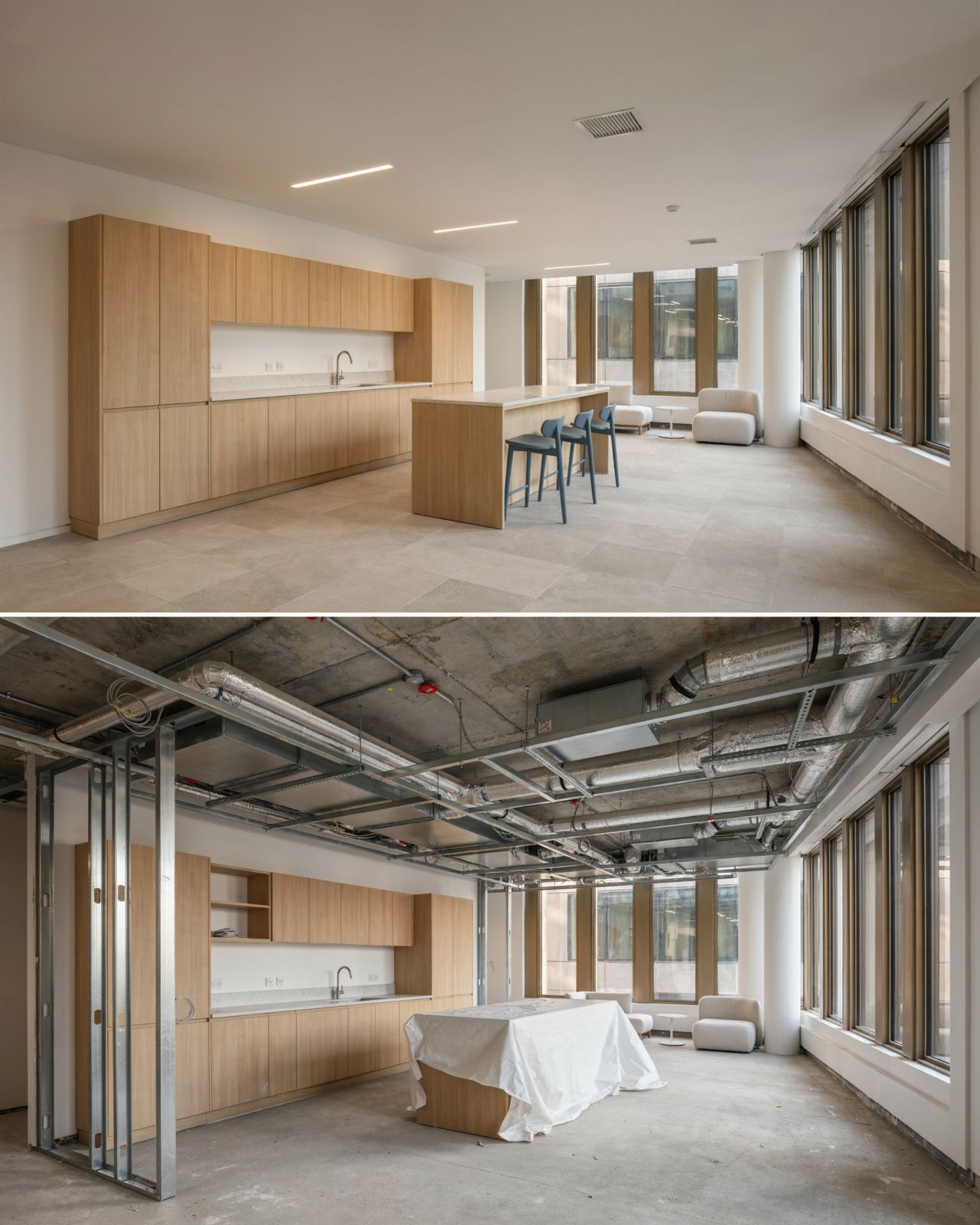
An open, uncluttered office might look straightforward in a rendering. The team still has to work out the ventilation runs, maintenance access, and how loose and fixed furniture fit into the space. Every decision also needs to fit the budget.
A clean ceiling, for example, still needs to accommodate the services above it and access to maintain them. A furniture layout needs to work for the people using the room. Those requirements can affect the design, the quantities to be priced, and the work needed to deliver it.
Considering these questions early gives the client a clearer basis for comparing options. An estimate can help show the cost implications of a preference while there is still time to revise it. It should also make clear which details remain unresolved.
Keep the disciplines connected
Architecture, engineering, and construction depend on different teams coordinating their decisions. Faster visualization is useful when it supports that shared work, with design, cost, function, and execution considered together.
The aim is to help people explore ideas while giving the delivery team enough information to evaluate them. A project's success depends on how well its teams turn an idea into something that works for the people who fund, build, and use it.